This year marks thirty years since the litas began to circulate again in Lithuania after a more than 50-year break. This happened on 25 June 1993. We had the litas for a significant part of our history until the introduction of the euro in Lithuania in 2015. During this period, Lithuania changed and modernised, and the litas became an important symbol of the change of independent Lithuania. In this series of articles dedicated to the 30th anniversary of the litas, we will discuss the most important stages of the development of the litas, its issuance, and remember the most important elements of the design of litas banknotes and coins. Today — about coins. What were they and what could they have looked like? What difficulties did coin developers experience?
As we wrote in an earlier article, litas banknotes and coins began to be developed while Lithuania was still part of the Soviet Union — in 1989. Lithuanians knew nothing about the creation of money, especially banknotes, and therefore there were many struggles There was no experience in creating banknotes and the design and protection requirements were high.
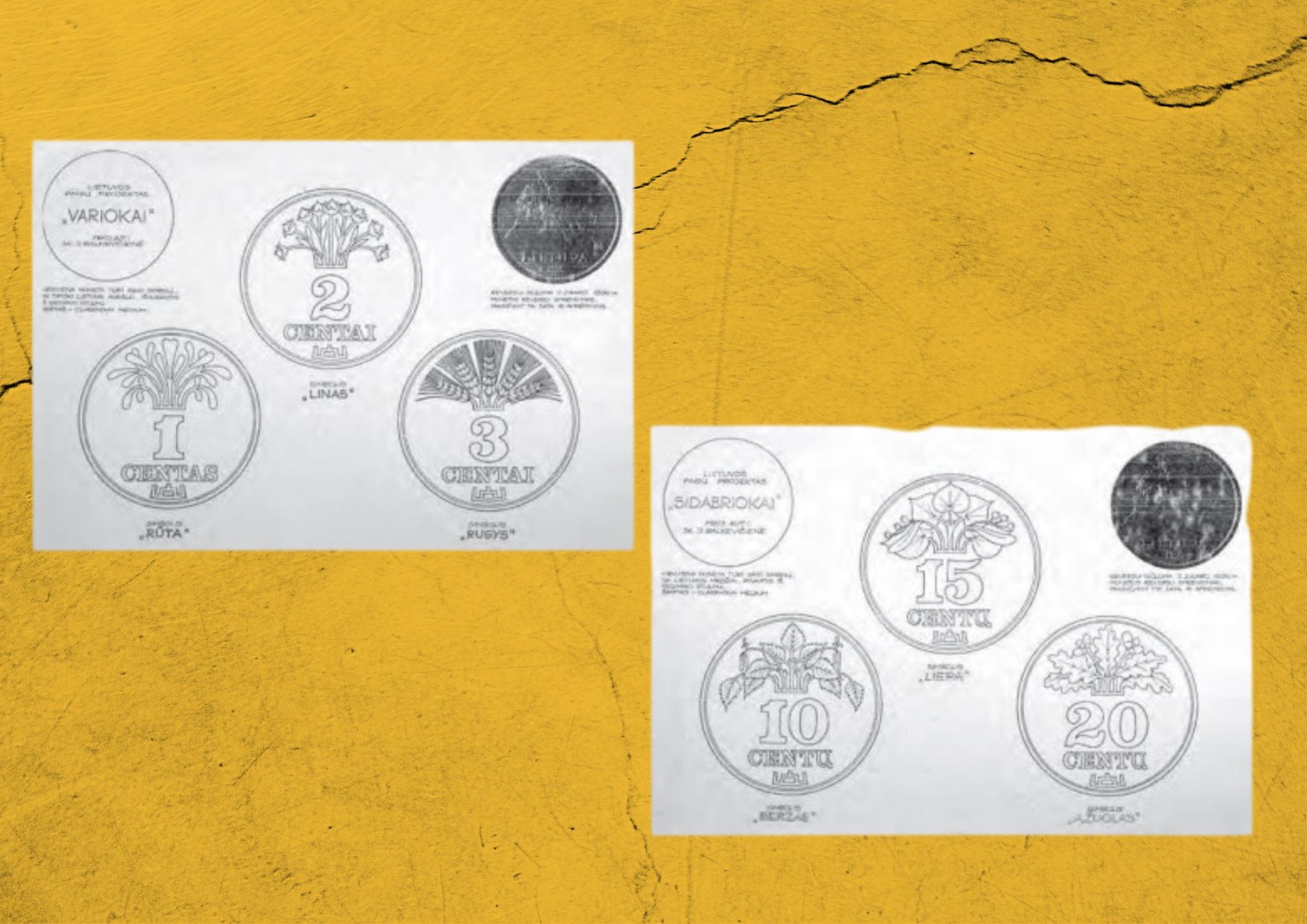
The situation was only a little better when creating coins. At least initially, the requirement was to create only graphic drawings without complex ornaments or security features. Fourteen artists participated in the coin production contest. The plan was to mint 1, 2, 3, 10, 15, 20 (kopeck-based) centas coins, and there was no plan originally to mint litas coins.
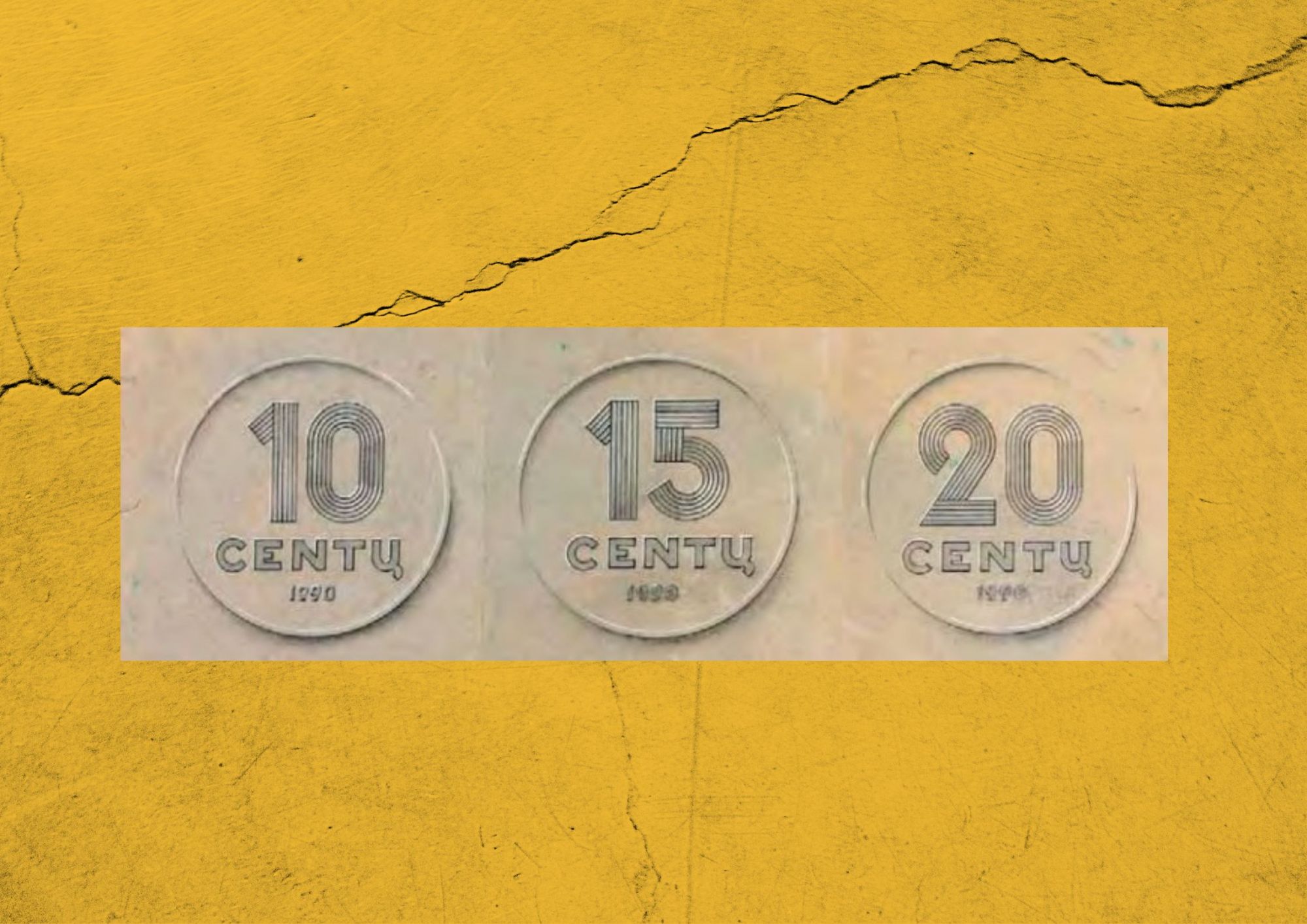
Although the process of coin-creation was much easier than for banknotes, and quite a few good drafts were presented, the commission did not award any banknote or coin creators first place in the first contest. The second prize was awarded to Petras Garška, while the third was shared by Jolanta Balkevičienė and Antanas Žukauskas.
Although, as mentioned above, no first prize was not awarded, Garška’s project, which received the second prize, became the basis for the later designed and minted coins. These projects used the ideas of interwar coin motifs. It is true that they were redesigned and modernised (for example, in the interwar period, plant drawings were replaced by generalised motifs of bells, which framed the digits of small denominations). Only the obverse remained the same as in the pre-war period (the Vytis by sculptor Juozas Zikaras).
One of the third-place winners’, J. Balevičienė’s, project also showed the influence of interwar coin design. The obverse was identical, while plant motifs appeared on the reverse. Of course, these were different designs and other plants than on the interwar coins: flax, wheat, oak, birch, and linden leaves.
The other third prize winner’s, A. Žukauskas, project was more modern and minimalist. The only decoration in the composition was a broad, parallel texture of lines activated by the nominal number bands.
The interesting coin projects by sculptor Antanas Olbutas were not among the prize winners. The gypsum coin models presented for the contest were unique in that they all had different obverses. Thus, in addition to the Vytis, he suggested depicting the iron wolf, the Columns of Gediminas, the Vilnius archcathedral, and other symbols or objects related to Lithuania. However, the commission did not consider this option and advocated for the same obverse for all the coins — the Vytis.
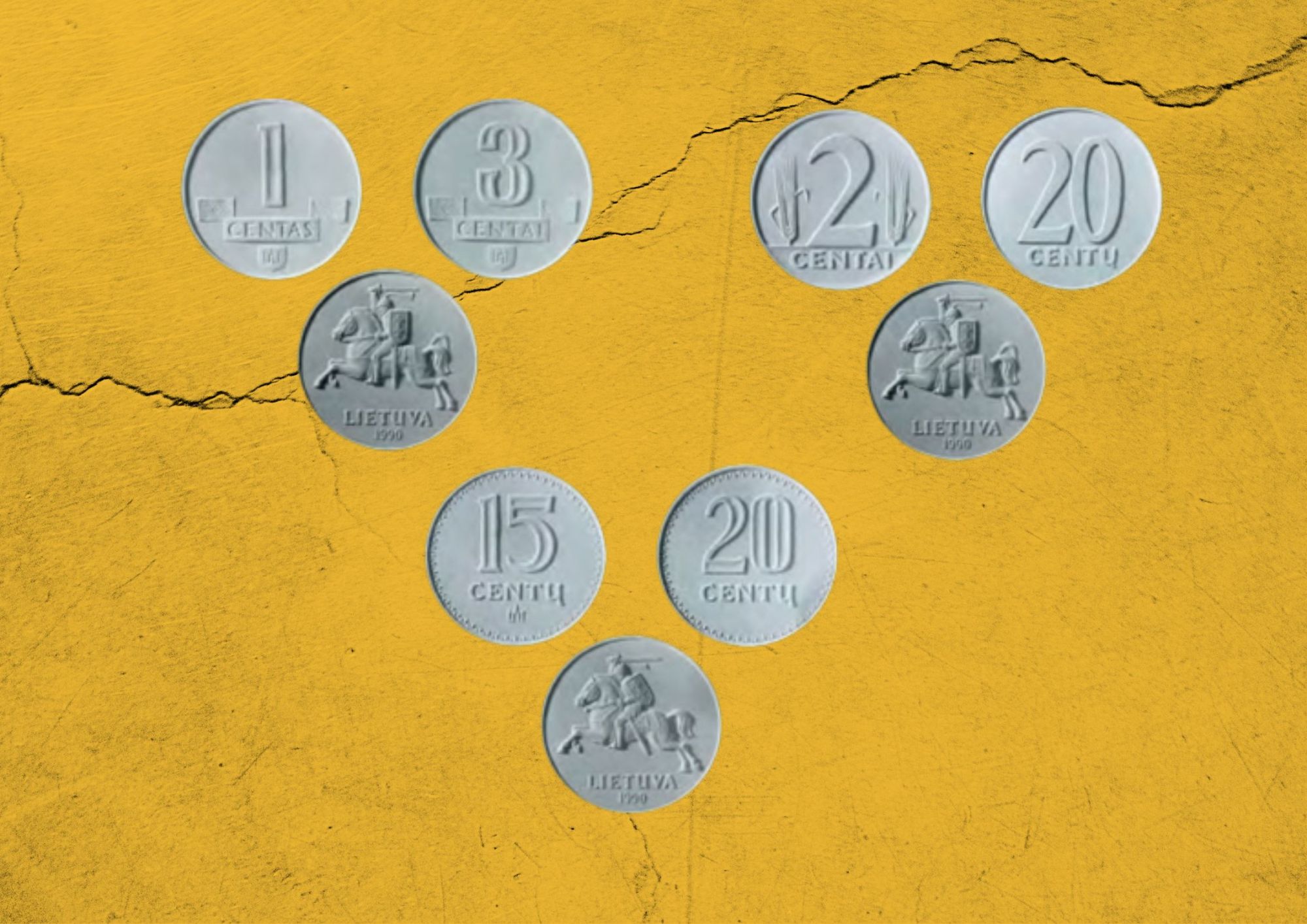
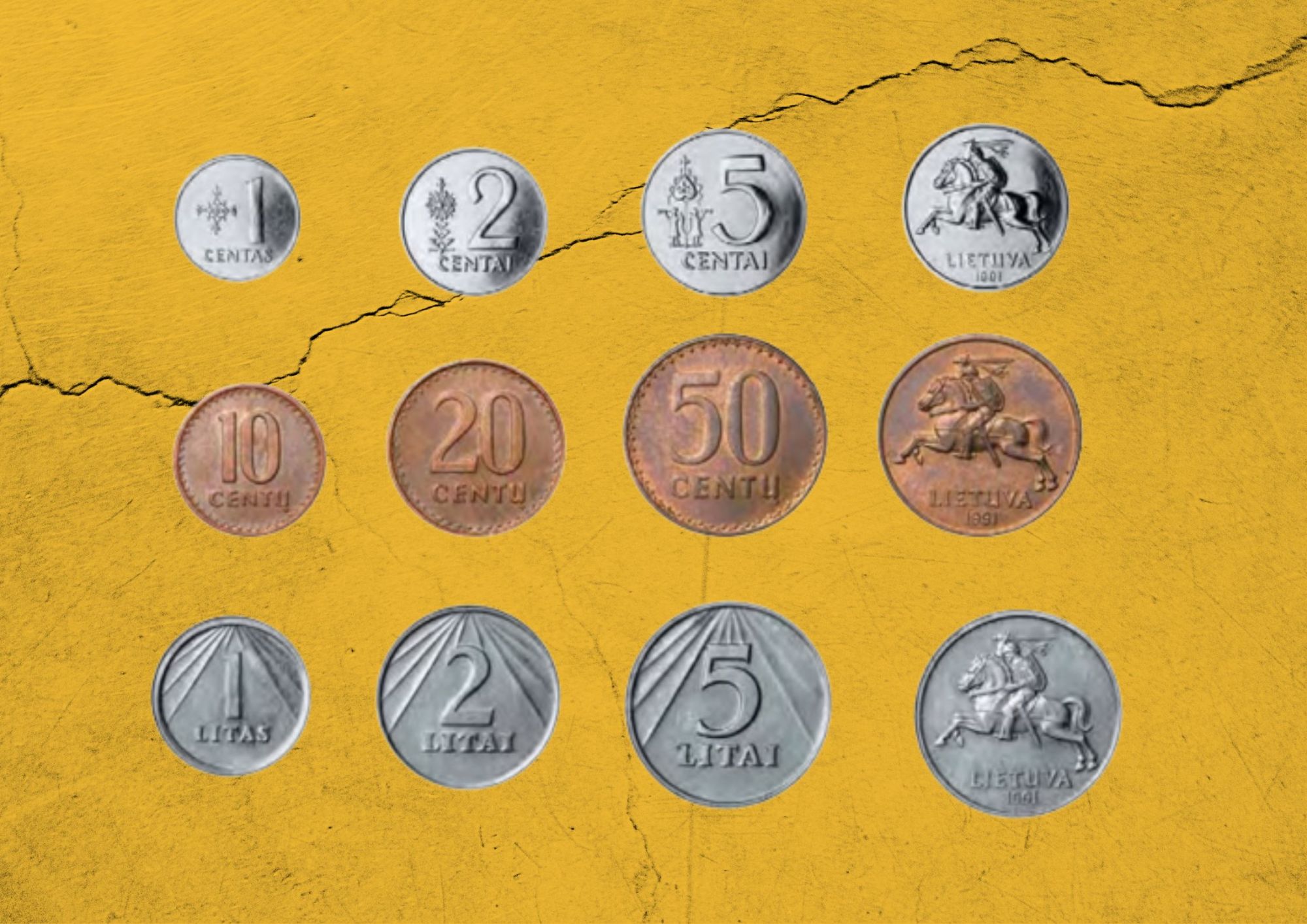
As mentioned above, P. Garška’s contest work was selected for the final version of the coin production. The commission trusted the author’s experience (he was already quite a well-known sculptor and medallist). Having a good knowledge of the technical characteristics, he was probably the most suitable for this work. Therefore, the Minister of Finance of the Republic of Lithuania, Romualdas Sikorskis, asked the artist in 1990 to create plaster coin models. Interestingly, due to the turbulent times and the uncertain political situation, the request was oral, without any written commitment. P. Garška gladly agreed and sat down to improve his works. The compositions of the 10, 20, and 50 centas coins presented for the contest and production were almost the same. However, in order to make coins more complex and difficult to copy for counterfeiters, the author put 50 reeds on the edges of the reverse, which, according to him, should remind us of the 50th anniversary of the occupation. He made more changes in the 1, 2, 5 centas coins. In the design variants, the stylistic unity of the coins was maintained, while in the gypsum models it was abandoned. In smaller-denomination coins, the number of the denomination was pushed to the right, and on the left there was a place for ornamentation. The ornaments of all three centas coins were different, related to Lithuanian folk art and symbolism: on the 1 centas — an ornament with triangular tulips in the corners and Columns of Gediminas in the centre, 2 centas — a spindle-shaped ornament, at the top of which — a stylised image of the sun, and below, in the right corners of the triangles, squares, 5 centas — at the top of the ornament — a cross, below it, on both sides of the leaf, snakes, and even lower, on both sides of the stem — trumpet-blowing angels.
The coin was minted in 1992. It was then that the idea arose that, in addition to the centas, metal litas could also exist. It was decided to mint 1, 2, and 5 litas coins. P. Garška was contacted again. Since litas coins were not created during the contest, the author had to re-create the litas. The style of all the denominations is the same (only the size differed): the nominal number seems to be illuminated from above, emanating rays in the shape of a pyramid. Because of this, people later referred to them as “shower coins.”
It was originally planned to produce much larger coins, but later their diameter was reduced to save metal.
So how were the coins made? We will tell you about this in the next article.