
We have already written that in 1990 a contract with the French banknote printing company Francois Charles Oberthur was signed, and drafts of litas banknotes approved at that time were sent to it. Let us remind you what these banknotes were supposed to look like: the 100 litas banknote was to portray S. Daukantas and Vilnius University (yellowish green), the 50 litas banknote — J. Basanavičius and Vilnius Cathedral with St. Christopher (greenish grey), 20 litas — Maironis and the War Museum with the Statue of Liberty in Kaunas (pink), 10 litas — Vydūnas and Klaipėda (yellowish brown), 5 litas — S. Darius and S. Girėnas and Lituanica on the background of the outlines of the American, European continents, and the Atlantic Ocean (dark grey), 2 litas — a portrait of a woman and Trakai Castle (green), and 1 litas — a portrait of a man and imagery proposed by the artist (light brown).
The French company refused to print the banknotes. By the way, the originals of the projects remained in the French printing house. They were returned to the Bank of Lithuania only in 1997. They are currently stored in the Money Museum.
A new agreement with the United States Banknote Corporation (USBC) was signed. New banknote denominations were approved and planned. 1, 2, 5 litas banknotes were abandoned and they were supposed to be replaced by coins, but the denominations of 200, 500 and 1,000 litas were discussed.
The approved denominations of the litas changed several times, so it was still unclear what to depict on the banknotes. The smallest denominations previously approved — 1, 2, and 5 litas — were supposed to include “archaeological, ethnographic, historical motifs, stylised Lithuanian people, grand dukes,” and later, after deciding not to use these denominations, some of the planned images decorated banknotes of other denominations and at the same time “disrupted the sequence of big money.” Since Lithuania was unwilling to give up the portrait of S. Darius and S. Girėnas, which was on the 5 litas banknote, Vydūnas, who was supposed to be on 10 litas, had to be sacrificed. The services of artists who created the smallest denomination banknotes were also abandoned.
Following the conclusion of a contract for the production of banknotes with the US company USBC at the end of 1990, new projects for the 10, 20, 50, 100, 500, and 1,000 litas banknote themes were to be improved and refined. Their authors were Giedrius Jonaitis (10 litas), Justas Tolvaišis (20 litas), Rimvydas Bartkus (50 litas), Rytis Valantinas (100 and 1,000 litas), Raimondas Miknevičius (500 litas). The artists continued to strive for the integrity of the banknote theme, i.e., they searched for a common style for all the denominations. The creative process was complicated and demanded a lot of strength and endurance.
With the end of the discussions and debates, the banknotes that were intended to be issued were to look like this:
1000 litas
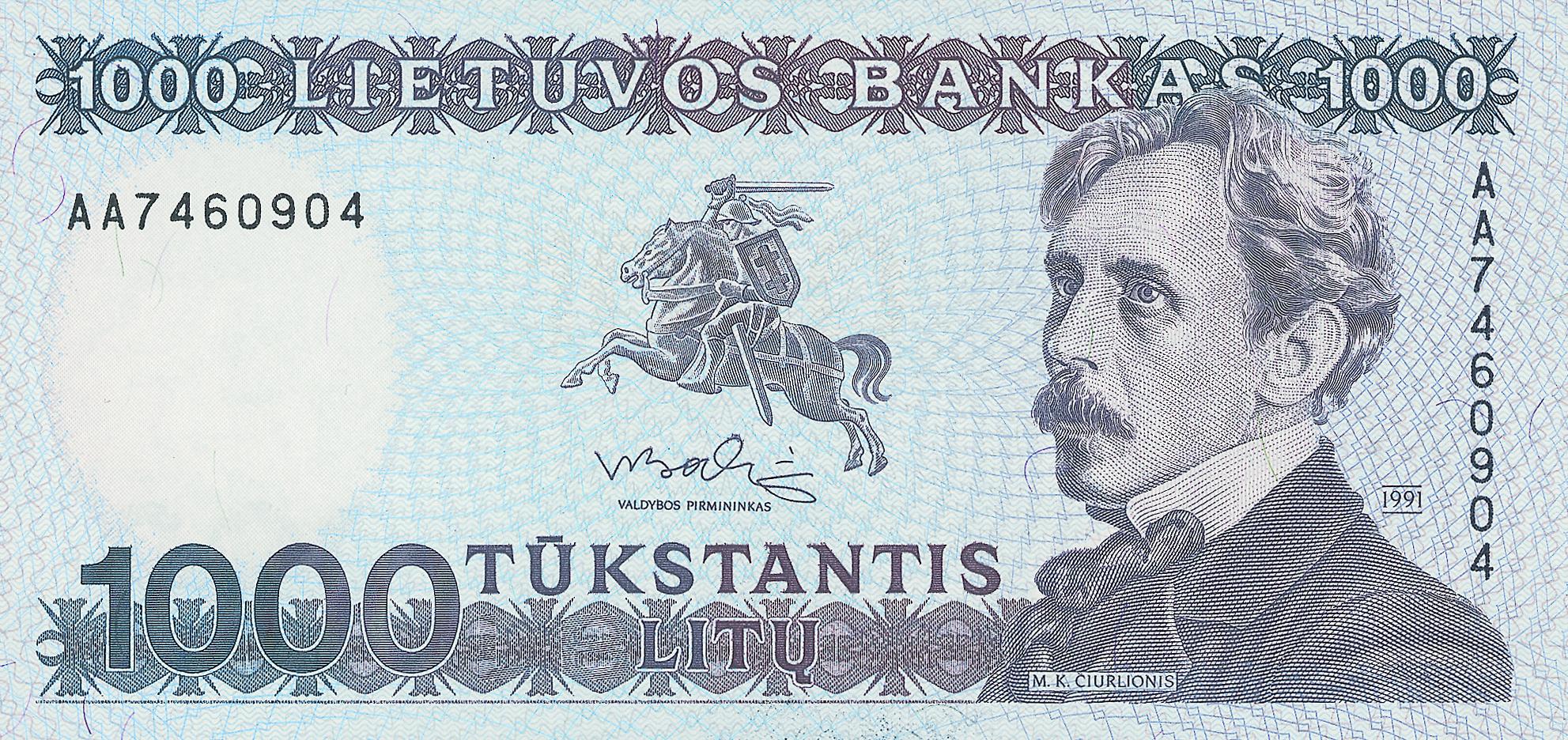

obverse — portrait of Lithuanian composer Mikalojus Konstantinas Čiurlionis (1875–1911), reverse — a fragment of M. K. Čiurlionis’ painting “Fairy Tale of Kings.”
500 litas
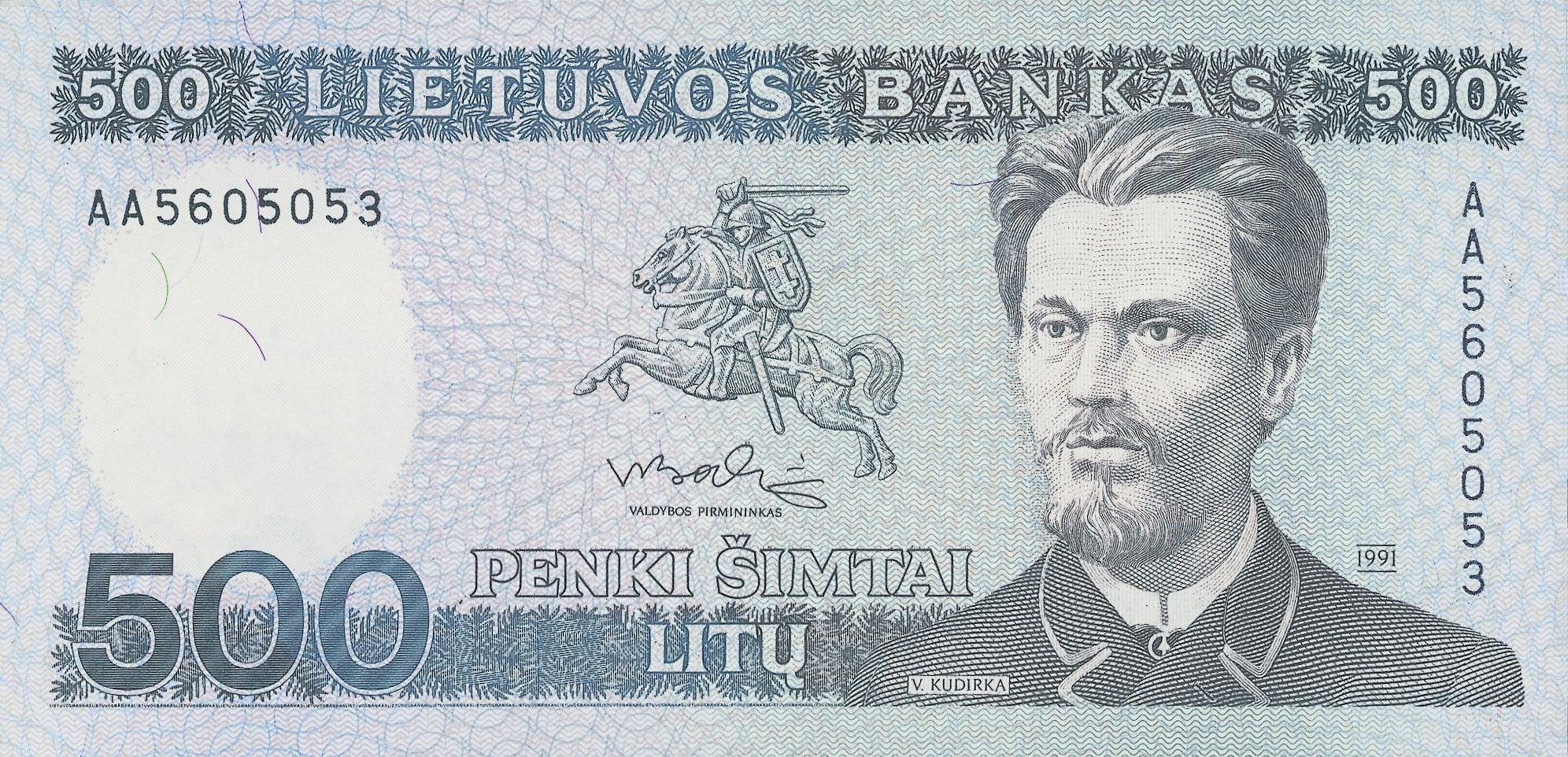
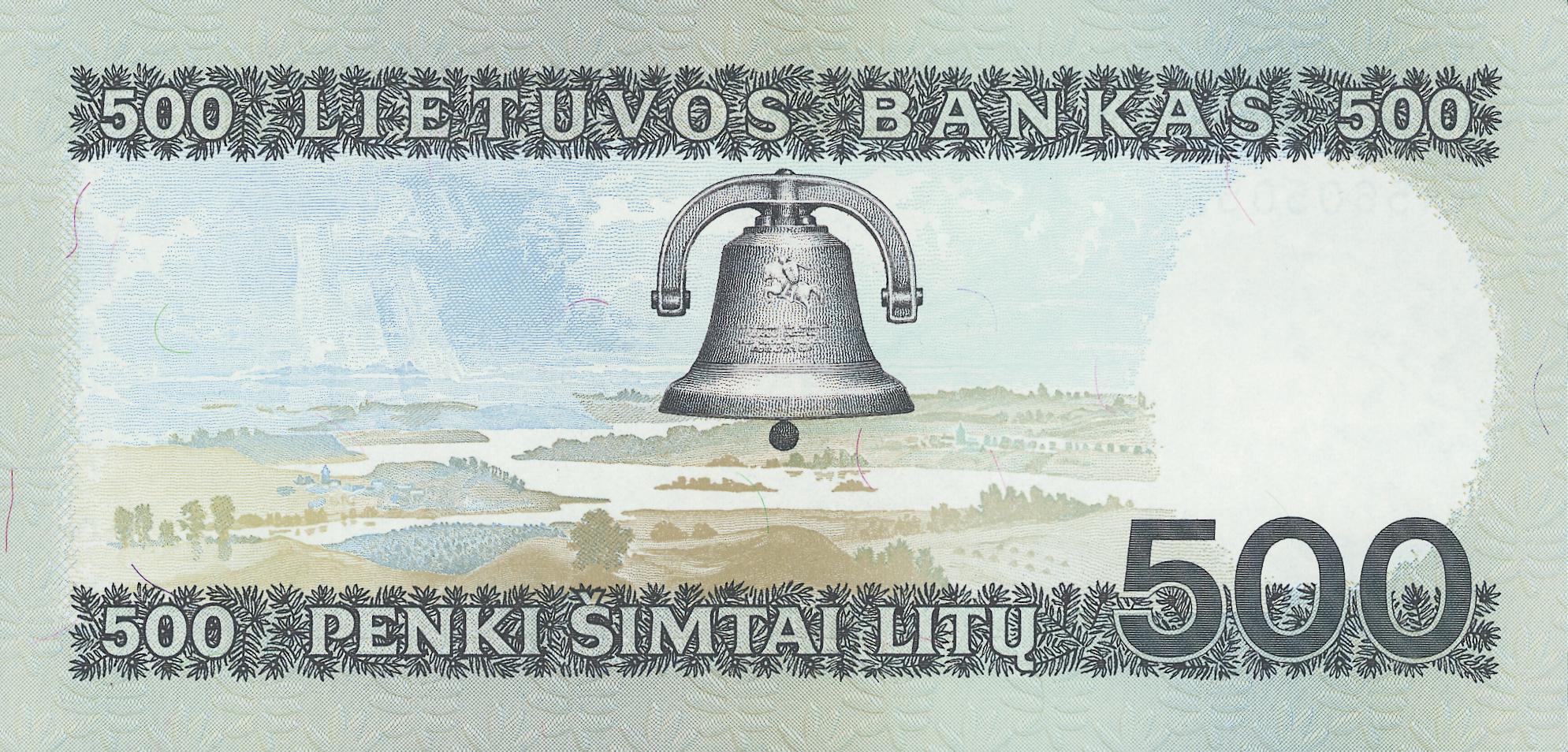
obverse — a portrait of the Lithuanian writer, national revival figure, author of the Lithuanian national anthem, Vincas Kudirka (1858–1899), reverse — Lithuania’s freedom bell against the background of a Lithuanian landscape.
100 litas
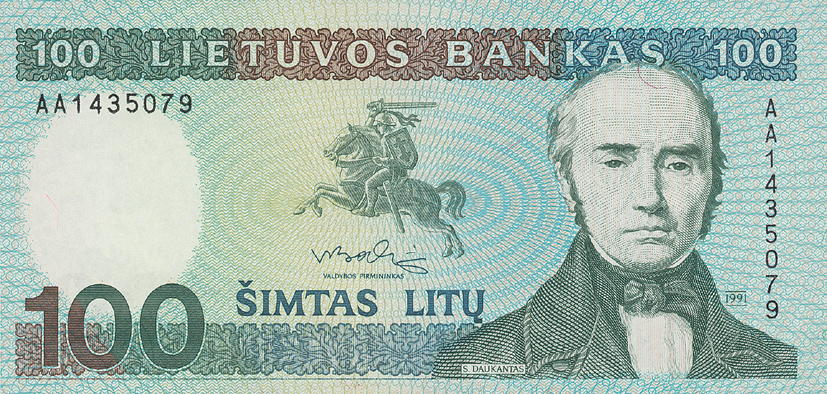
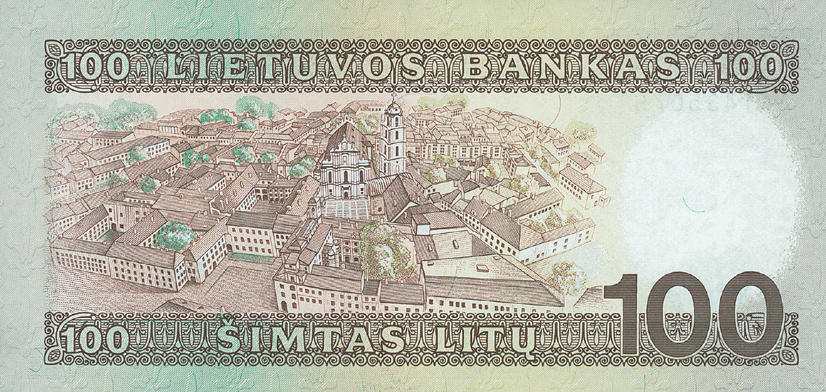
100 litas obverse — portrait of Simonas Daukantas (1793–1864), father of the national renaissance, historian who wrote the first history of Lithuania in Lithuanian, reverse — Vilnius University architectural ensemble against the background of the Old Town.
50 litas
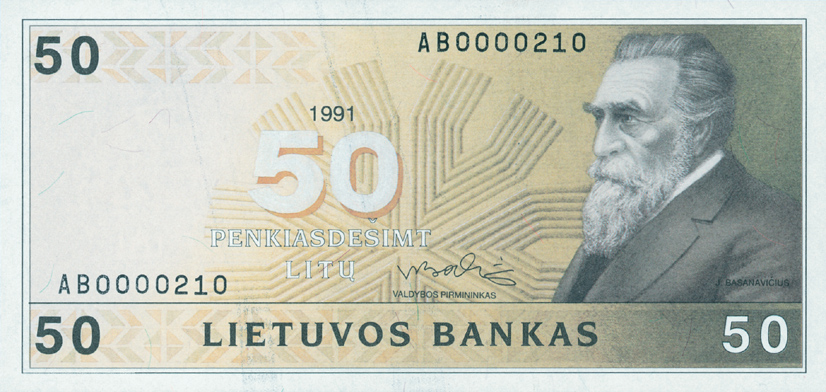
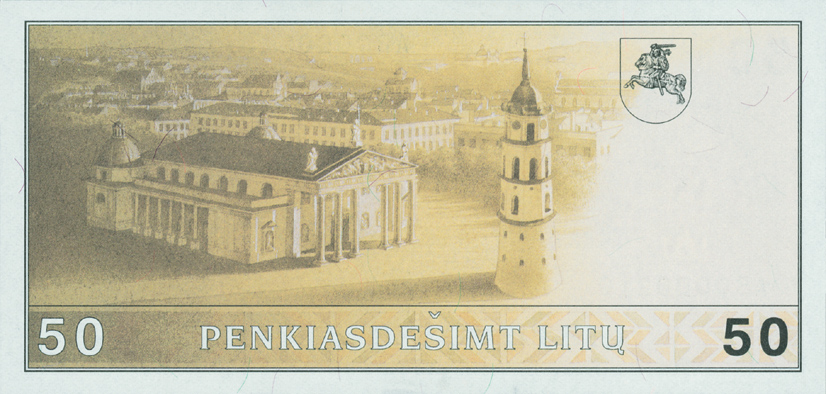
obverse — portrait of the Lithuanian patriarch, scientist, signatory of the Act of Independence of Lithuania, Jonas Basanavičius (1851–1927), reverse — Vilnius archcathedral basilica and bell tower in the background of the Old Town. \
20 litas
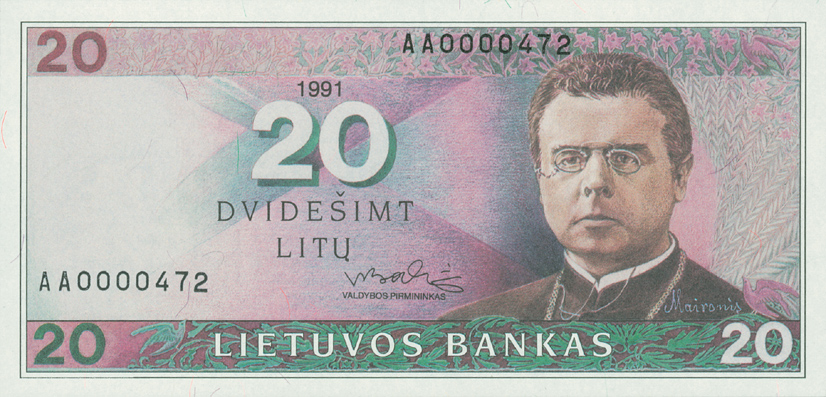
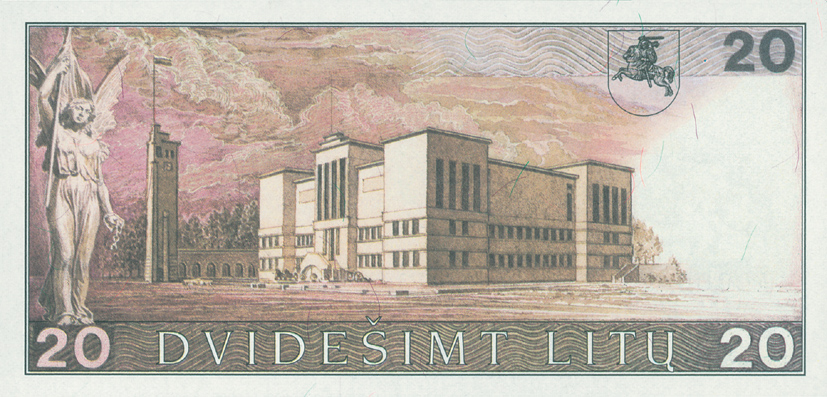
obverse — portrait of famous Lithuanian poet, bard of the national rebirth, Maironis (prelate Jonas Mačiulis, 1862–1932), reverse — the Freedom Monument in the background of Kaunas Vytautas the Great War Museum and bell tower.
10 litas
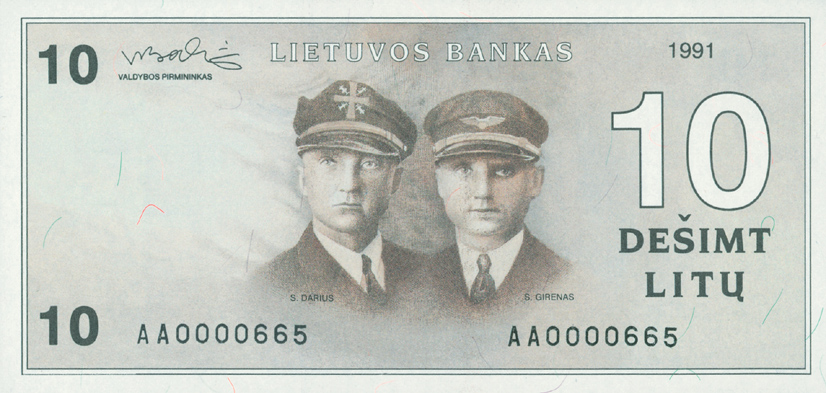
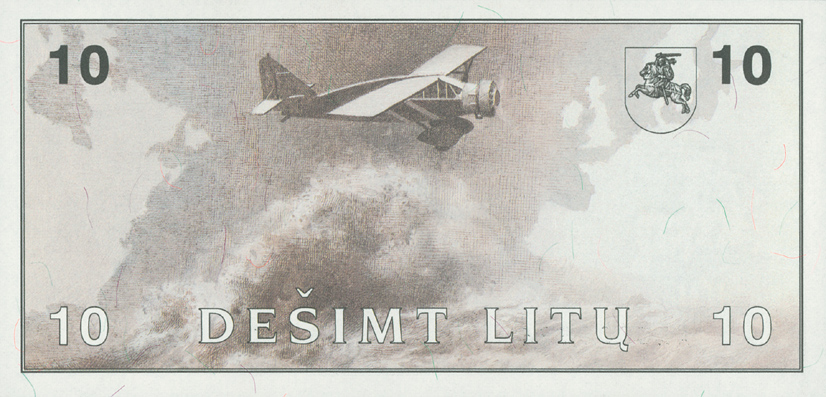
obverse — portraits of the heroes of the Lithuanian nation, Steponas Darius (Steponas Jucevičius-Darius, 1896–1933) and Stasys Girėnas (Stanislovas Girskis, 1893–1933), reverse — Lituanica flying over the Atlantic Ocean with fragments of the continents in the background.
The projects were revised in the first days of January 1991, in a very rushed manner, when the attempts by Soviet military units and local collaborators to carry out a coup d’état and to overthrow the democratically elected government of the Republic of Lithuania had already begun.
One of the litas creators, Rytis Valantinas, remembered: “<...> Something that sticks in my mind: there’s the TV tower, I was drawing in Lazdynai at the time, those terrible sounds, I would run out to the staircase, I saw how they sliced that tower with spotlights, and I wanted to run, of course, but I had to work. I can see everything very clearly, how the tanks shot empty rounds, even our house at Architektų Street shook <...>.”
The artists were unable to monitor and control the subsequent production process of the projects transferred to the USBC company. The printing house’s designers independently made decisions that fundamentally changed the original ideas of the Lithuanian artists. And what came out of this and how the production of the first real litas banknotes happened is something we will tell you in the next article.
