
At Laisvės avenue 76 in Kaunas, where Tadas Ivanauskas Museum of Zoology is currently situated, there used to be the Central Jewish Bank’s building with a passage in 1930s. The bank to support the cooperation was established in 1920 and started its operation in 1921. The bank’s founder was the Jewish National Council. The bank was established to act as a financial and clearing house of Jewish people’s banks. It led a network of 85 Jewish people’s banks and a couple of branches, so it operated in entire Lithuania, although its head office was in Kaunas.
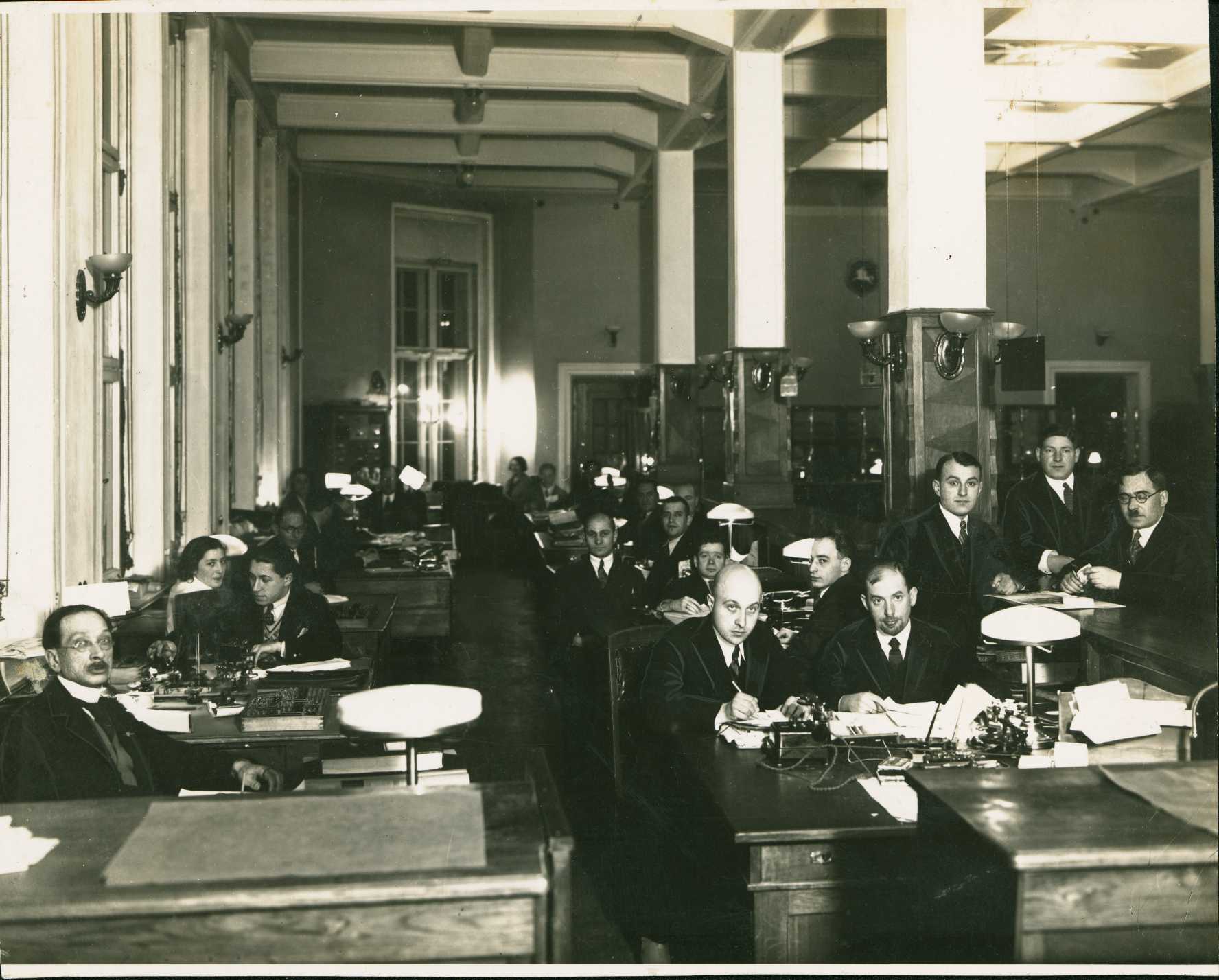 The authors of the Central Jewish Bank’s building were architects and engineers Grigorijus Mazelis and Mikas Grodzenskis. The building was designed in 1924 and constructed in 1925. The bank’s building was one of the first larger modern buildings in Kaunas at the time. According to the data of 1938, it was also the only passage in Kaunas. The building was called a passage because the main building of the bank stood at the far end of the plot whereas other sections of the building were oblong and narrow, with their ends facing Laisvės avenue. There were shops on the ground floor of the building and a cinema, café and library on the first floor. All of this formed a sort of shopping street that was well liked by the residents.
In 1927, the bank’s new statutes entered into force and the bank’s name was changed to Central Jewish Bank for the Encouragement of Co-operation. Alongside its name, its status also changed - it was turned from a Jewish people’s bank to an ordinary commercial bank.
.jpg) From 1948 to 1975, the building that was once a bank housed the Museum of Zoology that was moved there from the premises of Vytautas Magnus University in Donelaičio and Gedimino streets. The bank’s building was damaged during the war and was unsuited to house a museum.
From 1948 to 1975, the building that was once a bank housed the Museum of Zoology that was moved there from the premises of Vytautas Magnus University in Donelaičio and Gedimino streets. The bank’s building was damaged during the war and was unsuited to house a museum.
.jpg) In 1975, a large-scale reconstruction was started to add one more floor to the building. This reconstruction lasted for 6 years. The construction of the museum’s new building in Laisvės avenue started in 1977 and lasted for more than 3 years. The author of this project was Alfonsas Keturka. In 1980, the passage of the former bank was destroyed. On 27 July 1981, after the reconstruction, the museum was opened once again.
In 1975, a large-scale reconstruction was started to add one more floor to the building. This reconstruction lasted for 6 years. The construction of the museum’s new building in Laisvės avenue started in 1977 and lasted for more than 3 years. The author of this project was Alfonsas Keturka. In 1980, the passage of the former bank was destroyed. On 27 July 1981, after the reconstruction, the museum was opened once again.
